How can we bring design into our legal organizations, to foster better collaboration and more innovative change?
As the economics of the profession change, as technology reshapes what’s possible, and as more people reflect critically on their experience as legal professionals, our organizations need to rethink how they operate, how people move through them, and what kind of profession they are contributing to. And like every chapter before this one has asked: what about the laypeople? How can we build legal organizations that communicate with people well, that offer services in the way people want to receive them, and that provide empowering, trustworthy experiences of the legal system rather than dehumanizing and infuriating ones?
I hear from lawyers and legal workers all the time who want something different. They come with questions like:
“How can we be more innovative, more agile, and more prepared for the coming changes?”
“What would a flat, non-hierarchical law firm look like?”
“How can we be agents for change, so that our ideas will get paid attention to and moved forward?”
“I want a better kind of job. Why aren’t there more creative paths for people with JDs to do legal work and innovation?”
These questions deserve real answers — not platitudes about “innovation” and not cynical acceptance that legal organizations are unchangeable. This chapter lays out strategies, structures, and concrete starting points for building a different kind of legal organization: one that’s flexible, interdisciplinary, intentional about how it works, obsessed with actually solving people’s problems, and relentlessly focused on the mission rather than the status quo.
One overriding point: if you want to see a better legal system, we need more leaders with a strong point of view, a creative approach, and a public interest orientation. This is a time of disruption, yes — but also a time of tremendous opportunity. It is up to each of us to define what kind of legal system and profession we think would be better, and to seize control of our own careers to make it happen.
1. The Tuesday Morning Test
Here’s a simple diagnostic for your legal organization: What questions get asked on Tuesday morning?
In most legal organizations, Tuesday morning sounds like this: What’s on the docket today? What motions are due? Who’s covering which hearings? What’s in my inbox? These are the rhythms of traditional legal work — organized around procedures, deadlines, and the immediate demands of cases moving through the system.
In a design-forward legal organization, Tuesday morning sounds different: What’s happening with our users? Are their lives actually better because of our work? What does our new data tell us about our reach and impact? How can we use emerging technology to serve more people better?
The questions themselves reveal the culture.
This isn’t about one being “wrong” and the other being “right.” Traditional legal organizations ask procedural questions because they’re accountable to procedural systems — courts, filing deadlines, ethical obligations. Those questions matter.
But design-forward organizations add a different layer of accountability. They’re asking outcome questions, not just process questions. They’re holding themselves responsible not just for whether the motion was filed on time, but for whether the person’s life actually improved in a meaningful, durable way.
From One-Off Interventions to Durable Solutions
The shift starts when organizations begin mapping their work as workflows instead of just managing it as cases.
I’ve worked with legal aid groups who decided to actually diagram what happens from a user’s perspective — not the legal procedure, but the human experience. They map it out: Person has a problem. Person finds our website or hotline. Person waits. Person talks to an intake specialist. Person waits some more. Person gets a consultation. Person receives a letter or a form or some advice.
What these maps reveal is often uncomfortable: it takes a long time for a person to actually receive something of value. And what they receive often isn’t enough to solve their problem.
Here’s why: legal problems don’t sit still. A person facing eviction doesn’t just need a letter to their landlord. By the time they get that letter, the situation has often evolved — the landlord has escalated, new fees have appeared, the court date is looming, their child’s school situation is affected. One letter, one piece of advice, one form — these are interventions, but they’re rarely solutions.
The person is trying to get to a durable solution. They need something that actually resolves the underlying problem and stays resolved.
When organizations see this gap clearly — when they map it out and realize “we’re giving people something, but it’s not actually durable” — that’s when real change becomes possible.
What Changes When You See the Gap
Once you’ve mapped the user’s journey and seen where your services fall short, the next question becomes obvious: How do we redesign this?
Staffing and teaming shift. If durable solutions require ongoing support rather than one-off advice, you might need navigators or coaches who stay with people through the full journey, not just lawyers who provide a single consultation.
Technology becomes strategic. If you need to support people through multiple touchpoints over time, you start thinking about automated check-ins, document assembly tools, texting systems that keep people connected to help. Technology stops being “nice to have” and becomes essential infrastructure for delivering durable solutions at scale.
The unit of service changes. Instead of measuring success by “consultations provided” or “forms distributed,” you start measuring whether people actually resolved their legal problem and whether that resolution held over time.
This is fundamentally about moving from a transactional mindset to a transformational one. Not “did we deliver the service” but “did we transform the person’s situation in a way that lasts.”
That shift — from transactions to transformations, from interventions to durable solutions — is the foundation of a design-forward legal culture. Everything else in this chapter builds on it.
2. The Interdisciplinary Imperative
Once you can see your work as workflows — as a series of tasks, touchpoints, and outcomes that can be mapped and redesigned — you’re ready for the next crucial shift: you can’t do this redesign work alone.
Lawyers are brilliant at legal analysis, at identifying the right cause of action, at crafting arguments. But we’re not typically trained to see our work as systems that can be re-engineered. We’re not trained to think about user experience design, or process optimization, or how to measure long-term outcomes. We’re trained to practice law.
The organizations that successfully shift to a design-forward culture don’t try to turn lawyers into designers or technologists. Instead, they bring designers and technologists into the work as genuine collaborators.
How Lawyers Learn to See Differently
Here’s what I’ve observed: lawyers develop a “process and tech mindset” not by taking a course or reading a book, but by working alongside people who already think that way.
When a process designer sits down with a lawyer and starts mapping out what the lawyer does — “Okay, so first you review the intake form, then you check for conflicts, then you research the relevant statute, then you draft the letter” — something shifts. The lawyer starts to see their own work differently. Tasks that felt like “just how you do this work” suddenly become visible as choices. Steps that seemed inevitable become optional. Workflows that felt fixed become redesignable.
When a technologist asks “Why do you manually check each form for completeness? Could we build validation into the form itself so incomplete submissions are impossible?” — the lawyer realizes that constraints they’ve worked around for years might actually be solvable.
This is the interdisciplinary imperative: lawyers need to work with process designers who can map and analyze workflows, with technologists who can identify what’s automatable, with designers who can reimagine user experiences, with social scientists who can measure outcomes, with economists who can model costs and benefits.
Not as consultants who show up once, deliver a report, and leave. As ongoing collaborators who sit in the room when problems are being scoped, when solutions are being designed, when services are being evaluated.
The People You Need on the Team
What does an effective interdisciplinary innovation team actually look like? Over the years I’ve watched many of these teams form, and certain roles keep proving essential. A single person might embody several of these, but you need all of them represented:
The Builders and Makers are quick to take pen to paper, marker to whiteboard, mouse to software. They have idea sparks and are ready to run with them — turning abstract discussions into tangible prototypes before the conversation even ends.
The Listeners and Scouts have their ears to the ground. They know what people in the system actually want, what they’re complaining about, and what they’re doing. They understand where things need to happen and how to do it in ways that will get people to actually engage.
The Researchers and Data Gatherers love to figure out whether something is actually working or not. They can set up experiments and measure outcomes in ways oriented around finding meaningful information, not just confirming what we already believe.
The Strategy Makers are networked across all the other roles and can spot opportunities for innovation. They’re always looking for new value, new potential ways to get people better experiences and outcomes. They find connections across groups — even outside the organization — and promote them.
The Process Champions are passionate about how the team operates. They assemble people into working groups, set out action plans, keep teams on track, and make sure good ideas don’t die in the gap between brainstorm and implementation.
The Seeders help spread good ideas and build momentum. They talk up projects, they advocate to skeptics, they communicate what the organization is doing to the broader community. They embody the innovative stance and attract other leaders who want to work this way.
From Legal Work to Work Product
One of the most powerful shifts happens when interdisciplinary teams start talking about legal work differently — not as “cases I handle” but as “work product we create” and “tasks that need to be done.”
This language shift matters. Once you’re thinking about work product and task sequences, you can start asking: What are different ways to create this work product? Is there a different sequence of tasks that would be faster, cheaper, more effective? Which tasks actually require a lawyer’s judgment, and which could be done by technology, by trained paralegals, by the user themselves with the right support?
The lawyer brings deep knowledge of the legal domain, the substantive expertise, the ethical constraints. The technologist brings knowledge of what’s possible with current tools. The designer brings frameworks for understanding user needs. The social scientist brings methods for measuring whether any of this is making people’s lives better.
No single discipline has all the knowledge needed to redesign legal services for the 21st century. The work is inherently interdisciplinary.
When Collaboration Becomes Culture
But here’s the hard part: lots of legal organizations have experimented with interdisciplinary collaboration. They get a grant, bring in a designer for a project, work together for six months, create something interesting. And then the grant ends, the designer leaves, and everyone goes back to their silos.
The question isn’t whether interdisciplinary collaboration is valuable — most people who’ve experienced it know it is. The question is: what makes it stick? What distinguishes organizations where interdisciplinary work becomes the culture, not just a one-off experiment?
That’s what we need to explore next: the organizational infrastructure that makes this way of working sustainable.
3. Building the Infrastructure for Strategic Thinking
The most common objection I hear from legal organization leaders sounds like this: “We’re too busy to be strategic. We’re drowning in cases. Our people are maxed out. We can’t afford to have them step back and think big picture when there are clients who need help right now.”
I understand this objection. I also believe it’s backwards.
I’ve talked to lawyers and legal workers who, after going through a design workshop, say: “This is great, but there is no way I can do this at my organization. We are too cash-strapped, understaffed, stressed-out, time-deprived, bureaucratic, traditional…” The list goes on. These constraints are real. But the “we’re too busy to be strategic” mindset is exactly what burns people out and keeps organizations stuck in reactive mode, perpetually overwhelmed, unable to improve how they work.
Here’s the reality: there is always a moment — once a quarter, once a month — to come up for air, look at the big picture, and ask: how can we make this better? Organizations that treat strategic thinking as a luxury they can’t afford are choosing to stay stuck.
Design-forward organizations make a different choice. They build infrastructure that empowers their subject matter experts — their seasoned attorneys, their experienced paralegals, their frontline staff who know the work best — to take pauses, to question how things are done, to review data, to talk with users and teammates, and to either tweak or potentially overhaul their service models.
What Infrastructure Actually Looks Like
Exploration time is protected and legitimate. People have designated hours when they’re expected to step back from immediate case work and think about improvements. This time isn’t “if you happen to have a slow day” (which never comes). It’s built into job expectations and workload planning.
Cross-disciplinary mixing is encouraged as professional development. When someone wants to attend a conference where they’ll meet technologists, designers, researchers, or economists — not just other lawyers — that’s celebrated and supported.
Bringing in users and data is normal practice. There are regular opportunities — quarterly reviews, project debriefs, service design sessions — where the team looks at data together, talks to past users about their experiences, and uses those inputs to question and improve how they work.
Innovation is rewarded, not just tolerated. When someone proposes a university partnership, tosses out an idea for new technology, or suggests a different way to structure a service, they’re met with genuine interest and engagement, not reflexive “no” or “maybe someday.”
Creating the Magic Circle
There’s a concept I keep coming back to when I think about what design-forward organizations feel like from the inside: the Magic Circle.
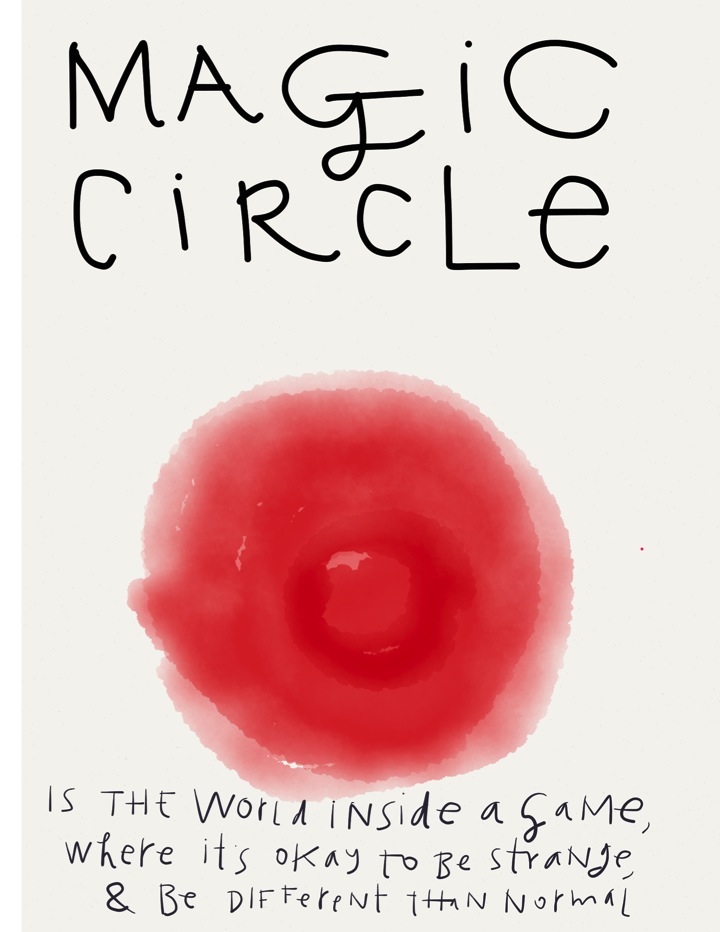
In game design, the Magic Circle is the boundary that separates the space of play from ordinary life. Inside the circle, different rules apply — things that normally aren’t possible become possible, things that are normally risky become safe to try.
Design-forward legal organizations create their own kind of Magic Circle. Inside it, people feel a sense of possibility, of experimentation, of safety. What’s normally “not how we do things” becomes “let’s try it and see.” What’s normally too risky to propose becomes the subject of a structured pilot. What’s normally someone’s unspoken frustration becomes a design brief.
Creating this Magic Circle is fundamentally a leadership act. Someone has to say: in this space, in this time, with this team, we are going to work differently. We are going to question assumptions, prototype new approaches, test things with real users, and learn from failure instead of punishing it.
The circle doesn’t have to encompass the whole organization — not at first. It might be one team, one project, one quarterly sprint. But the goal is for people to experience what it feels like to work inside the circle, and then want to expand it.
The Problem-Solving Orientation
What ties all of this together is a fundamental orientation: these organizations see themselves as problem-solvers, not just procedure-followers.
Traditional legal organizations orient around procedures and compliance: Did we follow the right steps? Did we meet our ethical obligations? Did we file on time? Design-forward organizations add a problem-solving layer: What problem is our user actually trying to solve? What would it take to fully solve that problem? Are we currently solving it, or just addressing symptoms?
This problem-solving orientation shows up in how teams talk about their work. Instead of “we handle eviction defense cases,” it becomes “we help people stay stably housed.” Instead of “we provide consumer debt consultations,” it becomes “we help people get out from under crushing debt and rebuild financial stability.”
Customer Service Excellence
There’s another way to describe what I’m talking about: treating the people you serve as customers who deserve excellent service.
This language makes some legal aid providers uncomfortable. But strip away the discomfort and ask: what does excellent customer service actually mean? It means your experience matters. Your time is valued. We will communicate clearly. We will follow through on what we promise. We will make it as easy as possible for you to get what you need. We will measure whether we actually helped you, not just whether we processed your request.
These aren’t commercial values. These are human values. And legal organizations should aspire to deliver them.
Building on Great Technology
None of this cultural shift happens in a vacuum. Delivering excellent service, supporting full user journeys, enabling staff to work strategically — all of this requires great technology infrastructure.
This doesn’t mean expensive, custom-built systems. It means being thoughtful and strategic: document assembly tools so lawyers aren’t recreating forms from scratch, case management systems that track outcomes not just activities, communication platforms that work the way people actually communicate, data systems that make it easy to see patterns and measure impact.
Technology becomes a strategic priority because it’s what allows the organization to scale excellent service. The organizations successfully redesigning legal services aren’t doing it by just working harder or hiring more lawyers. They’re building on top of great technology that multiplies human capacity and improves the user experience.
Eyes on the Prize
The final piece of this cultural foundation is perhaps the most important: keeping your eyes on the prize. Design-forward legal organizations maintain relentless focus on their mission — increasing access to justice, solving people’s legal problems, improving people’s lives. They don’t get distracted by the status quo, by “how things have always been done,” by turf battles about what “real legal work” looks like.
When you’re truly focused on the prize, a lot of traditional assumptions become questionable. Maybe clients don’t need to meet with a lawyer in person during business hours. Maybe every case doesn’t need a lawyer at all. Maybe the most impactful thing you can do isn’t taking on more individual cases — maybe it’s creating a technology tool that helps thousands of people.
Eyes on the prize means being willing to question everything in service of the mission. It means measuring what matters — did we increase access, did we solve the problem, did we improve the person’s life — not just what’s easy to count.
4. The Defection Pattern (and How to Prevent It)
Here’s a pattern I’ve seen play out too many times:
A supervising attorney or an executive director goes on a journey. They attend a conference and hear about human-centered design. They visit another organization doing innovative work. They take a course on legal technology. They start seeing their organization’s work differently — they can suddenly see the workflows, the pain points, the opportunities to redesign.
They come back energized. They start proposing ideas: “What if we partnered with the university’s design lab?” “Could we pilot a new intake technology?” “I’d like to dedicate some time to mapping our eviction defense workflow.”
And they’re met with: “We don’t have budget for that.” “That’s not our priority right now.” “Maybe someday, but we’re too busy.” “That sounds interesting, but let’s focus on our core work.”
One “no” after another. One idea dismissed after another. And then, eventually, that person leaves. They go start their own organization, or join a more innovative one, or move to a tech company working on access to justice. The organization loses exactly the person who could have transformed it.
This is the defection pattern, and it’s one of the biggest obstacles to building a design-forward legal culture.
The Early Warning Signs
If you’re a leader in a legal organization, here are the warning signs that you’re about to lose an innovator:
They’re sharing ideas — about new technologies, different service models, partnerships — and those ideas are being met with polite disinterest or outright resistance.
They’re requesting things — time to explore, permission to attend a non-traditional conference, budget to pilot a tool — and those requests keep getting denied.
They’re expressing frustration about the gap between what’s possible and what the organization is doing — and that frustration is being treated as complaining rather than as valuable insight.
They’ve gone quiet — stopped proposing, stopped pushing, just quietly doing assigned work — which often means they’re already mentally halfway out the door.
How to Keep Your Innovators
Pair them with collaborators who have capacity. Connect your innovator with people who have complementary skills and actual time — your IT director, your operations manager, a process-oriented paralegal. The worst thing you can do is say “yes, great idea, go work on it” and then leave them completely alone.
Give them protected time, but make it project-based. Not “spend 10% of your time on innovation” (which gets eaten by urgent demands), but “you have 8 hours a week for the next 3 months to redesign our intake process, following a structured plan with these checkpoints.”
Connect them to outside networks and resources. Encourage them to attend key conferences, connect with university partners and innovation labs. These connections bring outside capacity and potentially funding into your organization, and they keep your innovator energized.
Require knowledge sharing. Innovation can’t stay siloed with one person. Build in the expectation that they’ll share what they’re learning, train others, document their process, bring colleagues along.
Follow a structured innovation process. It should follow the design process from Chapter 3: start with a clear challenge, do data collection and user research, frame a design brief, brainstorm with designers and technologists, choose one prototype, test and get feedback, iterate.
Overcoming the Forces of Resistance
Even with the right structures in place, you will encounter resistance. Internal critics who question resources being devoted to design work. Traditionalists who don’t want the organization’s reputation altered by new ways of working. People who have seen “innovation initiatives” come and go and are skeptical of the latest one.
There is no single answer to this. Every organization requires its own political navigation. But some strategies consistently help:
Small wins with visible results. A successful pilot that gets positive attention — from users, from funders, from the press — can verify that there is value in this way of working. One concrete improvement is worth more than a hundred slide decks about innovation.
User testimonials. When a person who used your redesigned service says directly that it helped them, that they had a better experience, that they felt respected and supported — that’s powerful evidence that’s hard for critics to dismiss.
Bring the critics along. This is perhaps the most important tactic: don’t work around the skeptics, work with them. Loop them into the design process. Feed into their goals. Help them feel like they have a stake in the project. The more someone feels like a co-author of an idea, the more they’ll support it. In the world of law especially, professionals tend to shoot down other people’s ideas and fall in love with their own. The more you can give ownership to potential critics, the more you sidestep that dynamic.
Give your ideas away. This is counterintuitive but powerful. Rather than presenting a finished proposal that you’re asking people to accept, involve others early so the ideas feel partly theirs. The more it seems like you invented something alone and are now springing it on colleagues, the more likely they will resist it, undermine it, and produce a list of all the ways it won’t work. Work alongside them from the beginning.
From Solo Champions to Organizational Capacity
The goal isn’t to have one brilliant innovator doing special projects on the side. The goal is to build organizational capacity — to create a place where multiple people are empowered to question how things are done, propose improvements, connect with outside partners, and pilot new approaches.
This happens when innovation stops being “that one person’s thing” and becomes “how we work.” You get there by starting with your innovators — supporting them, structuring their work, requiring them to share what they learn — and gradually expanding until innovation becomes organizational muscle memory.
But you have to start by not losing them in the first place.
5. Finding Your Partners in the Ecosystem
One of the most important things to understand about building a design-forward legal organization is this: you don’t have to build all the capacity in-house. There’s already an ecosystem of people and organizations who want to help with public interest innovation. You need to find them and learn how to work with them.
This ecosystem includes university-based legal design labs, public interest technology organizations, civic tech groups, design firms that do pro bono work, law school clinics, interdisciplinary research centers, foundation-funded innovation initiatives, and informal networks of people working at the intersection of law, technology, and design.
University Partnerships That Build Capacity
Some of the most powerful partnerships I’ve seen are between legal services organizations and university-based labs or clinics.
Here’s how it can work: A legal aid organization becomes a class partner for a university design lab or public policy program. Students work with the organization over a semester to help scope a challenge, conduct user research, gather data, map workflows, and explore redesign opportunities.
The legal organization provides the real-world problem and domain expertise. The students provide research capacity, fresh perspectives, and time to do deep exploratory work that staff can’t carve out from daily responsibilities.
By the end, the organization has well-developed ideas backed by research, specific opportunities for improvement, and prototypes or pilot plans ready to test. This positions them completely differently when they approach funders: instead of “we’d like to improve our services,” they can say “we’ve conducted user research with 50 clients, mapped our service delivery model, identified three key pain points, and developed a specific proposal to address them.”
Making Partnerships Actually Work
Not all university partnerships work well. What makes the difference?
The partnership needs to start early, in the messy problem definition phase. Don’t wait until you have everything figured out. Bring partners in when you’re still figuring out what the real problem is, what users actually need, what’s feasible to change.
The legal team needs to stay engaged throughout. This isn’t “hand the problem to the students and check back at the end of the semester.” It’s regular check-ins, ongoing dialogue, legal staff working alongside the student team. That’s how capacity gets built.
There should be a path to implementation. Before starting, talk about what happens after the research. How will promising ideas get tested? What’s the process for moving from prototype to pilot?
The partnership should include training for your team. Some of the most valuable outcomes are when staff learn new methods from working with university partners — how to do user research, how to map workflows, how to prototype and test. That builds lasting capacity.
The Wider Network
Beyond formal partnerships, there’s a wider network of people who share your mission and interest. Public interest technologists, civic tech organizers, social impact designers, innovation-minded people at peer organizations.
Find these communities. Show up. Share what you’re working on. You’ll discover people with relevant skills who are looking for meaningful ways to contribute to public interest work.
These relationships are valuable not just for specific projects, but for ongoing learning and accountability. When you’re part of a community of people all trying to innovate, you have people to learn from, troubleshoot with, and stay motivated with. You’re not alone in trying to push your organization forward.
You should be always listening to new kinds of thoughts and conversations, even from outside the legal domain. Presenting what your own organization is doing, showing it off to make it relevant to others’ work. Linking thought-leaders together into networks that help people hear better ideas sooner. Strategizing about how to meet more leaders and organizations, and how to make those connections useful.
Your job is to build relationships. Not “we need a developer for this project right now,” but “we’re working on improving access to justice in these ways — we’d love to stay in touch.” When you do have a well-scoped project with funding, you’ll already have relationships with people who understand your mission.
Building Relationships, Not Transactions
The theme running through all of this: you’re building relationships and capacity, not executing transactions. You’re not hiring a consultant to deliver a report. You’re partnering with people to build your capacity to understand and serve users better.
This relational approach requires more investment upfront. But it pays off in the ability to move faster when opportunities arise, to get better quality work from partners who deeply understand your mission, and to build lasting organizational capacity rather than just getting one-off deliverables.
The strongest design-forward legal organizations I know have rich ecosystems of ongoing partnerships. They’ve invested in building that ecosystem, and it becomes infrastructure that supports their continued innovation and improvement.
6. The Smallest Viable First Step
If you’ve read this far, you might be feeling two things at once: inspired by the vision, and overwhelmed by how far your organization is from it. That’s okay. Every design-forward legal organization started somewhere, and most of them started small.
The mistake is to think you need a grand transformation plan, a big grant, or a consultant to overhaul everything. You don’t. You need a conversation.
The Conversation That Changes Everything
Here’s what you do next month. Sit down with your supervising attorneys and your most seasoned paralegals — the people who know the work inside and out — and ask them two questions.
First: Where are the key pain points right now? What is so repetitive, so lengthy, so burdensome that users or the team are getting burned out? What’s the process that makes you cringe every time?
Second: Where are you most excited? What have you heard about other organizations doing that made you think “we could do that”? Where do you believe, with a little time and support, you could make a big impact?
These two questions will surface the raw material for your first innovation project. The pain points tell you where the need is urgent. The excitement tells you where the energy is. The sweet spot — where urgent need meets genuine enthusiasm — is where you start.
From Conversation to Action
Once you’ve identified that sweet spot, the next moves are straightforward:
Find one or two willing people. You don’t need the whole organization on board. You need one attorney or paralegal who’s excited about this, and ideally one person with some process or tech orientation.
Get free outside help. Reach out to a university lab, a civic tech group, a public interest technology network. Tell them what you’re working on. You will be surprised how many people are eager to help a legal services organization scope and tackle a real problem.
Scope it as a small pilot. Don’t try to redesign your entire intake system. Pick one specific workflow, one specific pain point. Map it. Research it. Brainstorm three ways it could be better. Pick the most promising and build a rough prototype. Test it with a handful of real users.
Document everything. Write down what you did, what you found, what worked, what didn’t. This documentation lets you share learning with the rest of the organization and builds the evidence base you’ll need when you want to go bigger.
See if there are legs. If the pilot shows promise — if users respond well, if staff see the value — you’ve earned the right to invest more. Now you can go to your ED or board with evidence, not just enthusiasm. You can approach funders with a well-developed proposal, not a vague aspiration.
The Gradual Build
This is how organizational culture change actually works. Not through mandates from the top or dramatic overnight transformations, but through small, concrete experiments that demonstrate a better way of working.
One successful pilot creates permission for the next one. One team that sees their work differently starts influencing the team next to them. One supervising attorney who’s learned to map workflows starts teaching others. One university partnership leads to a civic tech connection, which leads to a funder interested in innovation.
It compounds. Each step builds on the last. And gradually, the organization shifts — not because someone declared a new culture, but because people experienced a better way of working and wanted more of it.
You Already Have What You Need
I want to close by pushing back on a belief I encounter in almost every legal organization I work with: that they don’t have enough — enough money, enough staff, enough time, enough technical skill — to work this way.
Here’s what you actually need to start: people who care deeply about the mission and who are frustrated that things could be better. I have never encountered a legal organization that didn’t have those people. They’re your supervising attorneys who lie awake thinking about the cases that fell through the cracks. They’re your paralegals who’ve quietly built workarounds for broken processes. They’re your intake staff who hear every day what users actually need.
Those people — their knowledge, their frustration, their ideas — are the starting material for a new culture. You don’t need to import innovation from the outside. You need to create the conditions for the innovation that’s already latent in your organization to emerge and flourish.
Give them the conversation. Give them the time. Give them the partners. Give them the permission. And then get out of the way.
That’s how a new culture for legal organizations begins.
7. Toolkit: Running Design Sessions in Your Organization
This final section is a practical toolkit. If the rest of this chapter is about why and what, this section is about how — specifically, how to run design workshops, sprints, and collaborative sessions that bring this way of working to life inside your organization. These are my hard-won notes from years of facilitating legal design sessions, and I’ll keep adding to them as I learn more.
Why Hold a Design Session?
Design sessions serve three purposes at once. First, they train people in new methods — giving participants hands-on experience with user research, brainstorming, prototyping, and testing. Second, they produce useful work product — new concepts, prototypes, and action plans around real challenges your organization faces. Third, and perhaps most importantly, they shift culture — giving people a lived experience of what it feels like to work in a more creative, collaborative, user-centered way.
Even a three-hour workshop can plant seeds that change how people think about their work for years afterward. The goal isn’t just the ideas that come out of the session — it’s the mindset shift that participants carry back to their daily work.
Types of Design Sessions
Different situations call for different formats:
The Generative Leap gets a group energized with ideas around a broad challenge area and builds shared investment. Good for when you’re starting something new and need to explore the possibility space.
The Targeted Sprint addresses a specific, known problem — a broken process, a service gap, a user pain point. The challenge is already defined; you need creative solutions.
The Design Thinking Bootcamp teaches the design process itself, with overviews, exercises, and in-the-field practice. Good for onboarding a team that’s new to this way of working.
The Innovation Launchpad takes existing ideas and workshops them forward — participants come with their own proposals and leave with stronger, more developed, more tested versions.
The Agenda Setter brings stakeholders together to create a shared roadmap. The goal is to go from scattered thinking to a prioritized action plan with buy-in from the people who need to execute it.
The Role of the Facilitator
The design facilitator’s role is to set the tone, scope challenges, structure exercises that lead to good work product, and create what I’ve been calling the Magic Circle — an alternative reality where people can depart from their typical ways of working and adopt new mindsets and methods.
Think of yourself as part kindergarten teacher, part game show host. Your job is to model the behavior you want to see: listening closely, building on others’ ideas, being specific, staying positive, being willing to sketch and prototype rather than just talk.
The facilitator coaches teams through conflicts and stall-outs, breaks down inherited hierarchies that would otherwise dominate the room, and synthesizes key takeaways so the work doesn’t evaporate when the session ends.
Hard-Won Tips for Running Great Sessions
Before the Session
Do your homework. Anticipate what kinds of designs your groups will come up with. You know the challenge, you know the users. Think about what types of ideas are likely to emerge and prepare feedback, questions, and provocations that can push teams past the predictable ideas into more original territory.
Brief your facilitators and coaches. Give them clear roles one or two days before the session. Lay out what questions and criteria each coach should care about. Tell them the goal — whether it’s a concept design, an action plan, or a viable prototype. The more you give them, the more they’ll be able to do on their own without your constant intervention.
Send pre-work. Share resources, examples, and inspiration before people show up, so they arrive oriented and ready to engage rather than needing a long runway of context-setting.
Give a firm structure, but build in flexibility. Share the agenda so participants know what to expect, but give yourself room to adapt in the moment if the group takes you somewhere productive.
During the Session
Be strict with time. Use visible countdown timers as creative constraints. Having a deadline always visible gives people an endpoint and a motivator to move from talking to action. This is a gift to groups — it breaks the cycle of endless discussion.
Coach actively. Go around to each group, listen, intervene when they’re off-track, and give specific challenges: “You have 10 minutes left — can you sketch four different versions of this idea?” or “Take a blank piece of paper and come up with 10 new ideas in 5 minutes.” Coaching is the key. Without it, people will default to their normal working style regardless of what your slides say.
Don’t let the squeaky wheel get the grease. There will always be grumps, critics, and naysayers. People who think they already know everything about creativity. People who have seen innovation initiatives come and go. They will try to distract their group with snarky comments or pull you aside into arguments. You could try to convert them one-on-one, but that pulls you away from the majority of participants who are genuinely engaged. Attend to the energy of the room, not the loudest complainer.
Find the non-rookies. Identify participants who already have some design training and quietly invest them with leadership within their groups. They can serve as internal guides, steering the team when it goes off course and modeling good collaborative behavior.
Gamify where you can. Introduce small elements of surprise, competition, or public sharing. Having groups present to each other, vote on ideas, or compete against a timer creates energy and accountability.
After the Session
Always debrief. Allow participants to give you feedback — what worked, what didn’t, what they would change. This shows the design process in action: you’re modeling openness to feedback, testing, and iteration even in how you run your own sessions.
Plan your deliverables. The work product created during a design session can and should be distributed — to stakeholders who weren’t in the room, to leadership, even to the broader community. Document and capture your work throughout so you can generate these outputs without a scramble at the end.
Create a roadmap with stakeholders. After the session, collaboratively map out a plan of action with management and key stakeholders. This gets their buy-in on next steps and gives you cover to proceed. But try to protect your process — don’t promise final deliverables before you’ve had time to explore, test, and iterate.
The Power to Convene
I want to end this toolkit with a reflection on something that often goes unappreciated: the power to convene.
A facilitator has a remarkable set of powers — to bring people together, to focus them on an agenda, to direct their energies toward answering questions and generating work product that moves things forward. Half of this power comes from having a clear vision of what you want to work on. The other half is a learned skill in creating a constructive, generative, collaborative environment among people who might never otherwise sit in the same room.
As you design — and document your process openly — you can use your work to define an agenda for your organization, your field, even your industry. You can provoke others to do more ambitious and creative work. With design products, working papers, workshops, and public presentations, you can claim a leadership position and attract others who want to work this way.
The organizations and individuals who thrive in this new era of legal services will be the ones who exercise this power — who convene, facilitate, prototype, test, and lead by doing. Not waiting for permission, not waiting for the perfect conditions — but taking the design approach of prototyping, testing, and improving.